- What Problem Does a Slow Feeder Actually Solve?
- A Personal Note on Whether It’s Worth It
- When You Can Probably Skip One
- What to Look for If You Do Get One
- Shop This Guide
- Final Thoughts: Do You Need a Slow Feeder Bowl?
- Free New Pet Owner Checklist
- Everything you need for your dog or cat's first weeks home — get the free printable checklist.
As an Amazon Associate, we earn from qualifying purchases linked in this post.
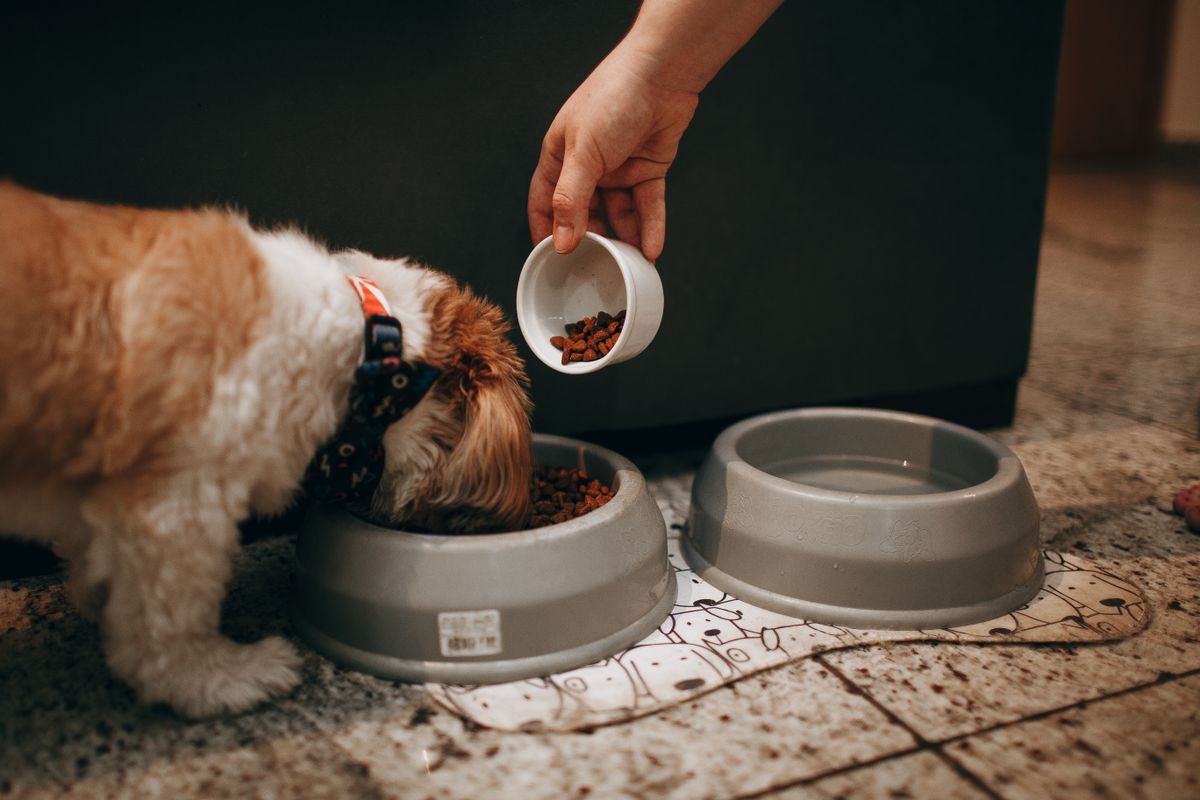
Do you need a slow feeder bowl, or is it just another trendy pet product? For most dogs and cats who eat quickly, yes — a slow feeder genuinely helps, and it’s one of the few “trendy” pet products backed by real veterinary reasoning rather than marketing.
What Problem Does a Slow Feeder Actually Solve?
Fast eating in dogs and cats isn’t just a funny quirk — it can lead to bloat, vomiting shortly after meals, and in large deep-chested dog breeds, it’s linked to a higher risk of gastric dilatation-volvulus (GDV), a serious and sometimes life-threatening condition. A slow feeder bowl uses ridges, mazes, or raised patterns that force your pet to eat around obstacles, physically slowing down each bite.
A Personal Note on Whether It’s Worth It
Owners of naturally fast eaters — often labrador retrievers, beagles, and many rescue animals who learned to compete for food — tend to see the clearest before-and-after difference. Meal time goes from under a minute to five or ten minutes, and post-meal vomiting or gagging often disappears entirely. Owners of already-slow, relaxed eaters usually notice much less of a difference, which makes sense since there wasn’t really a problem to solve.
When You Can Probably Skip One
If your pet already eats at a relaxed pace, free-feeds throughout the day, or has dental or jaw issues that make navigating ridges uncomfortable, a slow feeder isn’t necessary and can even be counterproductive. Some pets with anxiety around food also do better with a simple, predictable bowl rather than an added obstacle.
According to guidance referenced by the American Veterinary Medical Association on bloat and GDV risk factors, eating speed is one of several factors worth managing for at-risk breeds, alongside meal size and post-meal activity.
What to Look for If You Do Get One
Silicone or rubber slow feeders tend to be gentler on the mouth than hard plastic ones with sharp ridges. Depth and maze complexity should roughly match how motivated your pet is — a very determined fast eater will find a way around a shallow maze, so a deeper, more complex design may be needed.
If bloat risk is a concern for your dog’s breed, it’s also worth reading through our dog bed guide, since post-meal rest positioning is another factor some owners manage alongside eating speed.
Shop This Guide
If this gear makes sense for your pet, these links show current options and prices. Check sizing, materials, and reviews before you buy, and ask your vet if your pet has special needs.
Want our tested picks? Read our guide to the best slow feeder bowl.
As an Amazon Associate, we earn from qualifying purchases at no extra cost to you.
Final Thoughts: Do You Need a Slow Feeder Bowl?
So, do you need a slow feeder bowl? If your pet gulps food in under a minute, has a history of post-meal vomiting, or belongs to a breed at higher risk for bloat, it’s a low-cost change that’s genuinely worth trying. If your pet already eats calmly, you can safely skip it.
Sources & Expert References

About the Author
Jordan Lee
Jordan Lee handles product testing for ThePetGearList. Jordan shares a house with two dogs (a 60-lb mixed breed and a small terrier) and one cat, so gear gets tested across very different size and behavior needs before anything gets recommended. Before starting this site, Jordan worked at a mid-size animal shelter for five years, fitting harnesses and crates on hundreds of dogs of every size and temperament and seeing firsthand which gear held up to daily shelter use and which fell apart in a month. Every guide on this site is built the same way: buy or borrow the leading options in a category, run them for at least two weeks with real pets, and note the specific failure points — a harness buckle that cracked, a crate latch that a strong dog worked open, a feeder that clogged. The cheapest option that survives that test gets recommended first.