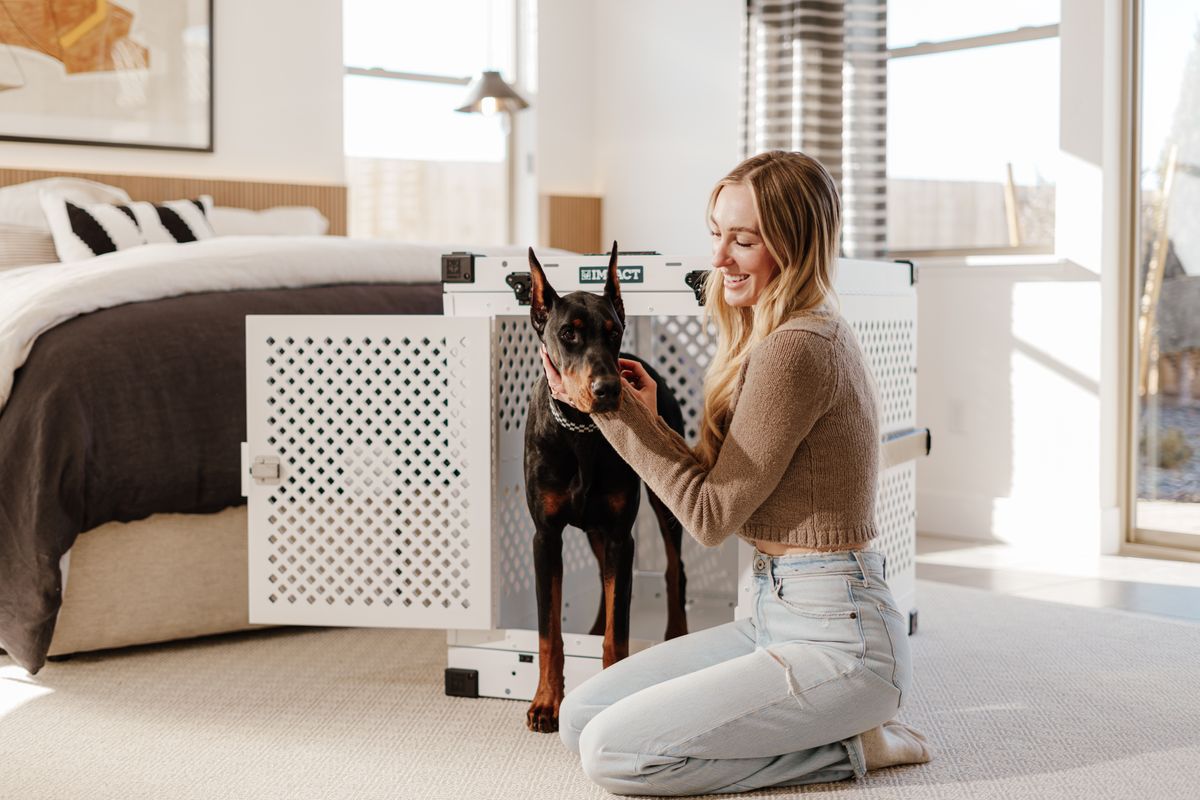
- What Genuinely Affects Crate Training Time
- When Training Can Genuinely Move Faster
- Wire Crate vs. Plastic Crate: Which Do You Actually Need?
- What About Dogs That Resist Longer Than Expected?
- A Personal Note on Crate Training Timelines
- Don’t Skip the Overnight Transition
- Frequently Asked Questions About Crate Training Time
- Shop This Guide
- Final Thoughts: How Long Does Crate Training Take?
- Free New Pet Owner Checklist
- Everything you need for your dog or cat's first weeks home — get the free printable checklist.
As an Amazon Associate, we earn from qualifying purchases linked in this post.
How long does crate training take? Most dogs learn to accept a crate within 1-2 weeks of consistent practice, but the honest timeline stretches longer for older rescue dogs or anything shorter for a food-motivated puppy who takes to it immediately.
What Genuinely Affects Crate Training Time
A few factors move the timeline more than anything else:
- Age — young puppies with no negative associations often adjust within days; adult rescues with unknown history can take several weeks.
- Consistency — daily short sessions beat occasional long ones; skipping days consistently extends the whole process.
- Crate placement and comfort — a crate in a busy, comfortable spot with bedding gets accepted faster than one in an isolated room.
- Past negative experiences — a dog previously crated as punishment needs significantly more time to rebuild trust in the space.
When Training Can Genuinely Move Faster
You can expect a shorter timeline in these situations:
- A food-motivated puppy — treats and meals fed inside the crate build positive association within days.
- A dog with prior positive crate experience — dogs that were crate trained before generally re-adjust much faster than a first-timer.
- Short, frequent sessions from day one — 5-10 minute sessions multiple times a day speed up acceptance more than one long session.
Wire Crate vs. Plastic Crate: Which Do You Actually Need?
Wire crates offer more airflow and visibility, which some dogs find reassuring, while plastic crates feel more den-like and enclosed, which can help anxious dogs settle faster. Neither speeds up training dramatically on its own, but matching the crate style to your specific dog’s temperament can shave real time off the adjustment period.
What About Dogs That Resist Longer Than Expected?
Some dogs take a month or more, and that’s not a sign you’re doing something wrong. If whining or distress continues well past the typical 2-week window, slow down the pace — go back to shorter sessions with the door open before pushing longer closed-door time. The American Kennel Club’s crate training guidance covers pacing and troubleshooting in more depth for dogs that need extra time.
A Personal Note on Crate Training Timelines
When owners ask me how long does crate training take, I tell them the number matters less than the pattern — if your dog is calmer in the crate this week than last week, you’re on track regardless of whether that’s day 5 or day 25. Watching for backward slides, not just hitting a deadline, is what actually indicates progress.
Don’t Skip the Overnight Transition
Daytime crate comfort doesn’t always transfer to overnight use right away. Many owners find their dog handles daytime naps in the crate fine within the first week but still struggles at night for another week or two, since longer stretches alone feel different from short daytime sessions. Treat overnight crating as its own mini-milestone rather than assuming daytime success means you’re fully done.
Frequently Asked Questions About Crate Training Time
Is it normal for a puppy to cry in the crate for the first few nights?
Yes, this is common in the first few nights and usually fades within a week or two with consistent, calm handling.
Can an older dog still be crate trained?
Yes — it often just takes longer and more patience than with a puppy, especially if the dog has no prior crate experience.
How many sessions per day speed up crate training?
3-4 short sessions daily tend to build comfort faster than one long session, especially in the first week.
Shop This Guide
If this gear makes sense for your pet, these links show current options and prices. Check sizing, materials, and reviews before you buy, and ask your vet if your pet has special needs.
As an Amazon Associate, we earn from qualifying purchases at no extra cost to you.
Final Thoughts: How Long Does Crate Training Take?
So, how long does crate training take? Plan on roughly 1-2 weeks for most dogs with consistent daily practice, though older or previously stressed dogs may need a month or more. For crate options to match your dog’s temperament, see our guide on keeping dogs occupied and comfortable at home.
Sources & Expert References

About the Author
Jordan Lee
Jordan Lee handles product testing for ThePetGearList. Jordan shares a house with two dogs (a 60-lb mixed breed and a small terrier) and one cat, so gear gets tested across very different size and behavior needs before anything gets recommended. Before starting this site, Jordan worked at a mid-size animal shelter for five years, fitting harnesses and crates on hundreds of dogs of every size and temperament and seeing firsthand which gear held up to daily shelter use and which fell apart in a month. Every guide on this site is built the same way: buy or borrow the leading options in a category, run them for at least two weeks with real pets, and note the specific failure points — a harness buckle that cracked, a crate latch that a strong dog worked open, a feeder that clogged. The cheapest option that survives that test gets recommended first.