- The Quick Answer by Dog Type
- Why Rain Affects Some Dogs More Than Others
- Signs Your Dog Would Benefit From a Raincoat
- What to Look for in a Good Dog Raincoat
- How to Fit a Raincoat Properly
- Helping Your Dog Get Used to Wearing a Coat
- When a Raincoat Is Not a Good Idea
- A Practical Scenario: Two Dogs, One Rainy Morning
- Shop This Guide
- Frequently Asked Questions
- Final Thoughts: Do Dogs Need a Raincoat?
- Free New Pet Owner Checklist
- Everything you need for your dog or cat's first weeks home — get the free printable checklist.
As an Amazon Associate, we earn from qualifying purchases linked in this post.
Do dogs need a raincoat? Many do, but not all. Small dogs, short-coated breeds, seniors, puppies, and dogs who hate getting wet benefit most from a raincoat, especially in cold, windy rain. Thick double-coated breeds such as Huskies, Labradors, and Newfoundlands are built to shed water and usually stay comfortable without one, although a coat can still save you a lot of towel time after a muddy walk.
The honest answer depends on your dog’s coat, size, age, health, and the kind of weather you walk in. Below we break down which dogs really benefit, what to look for in a good raincoat, how to fit one properly, and the times when a coat is more hassle than help.
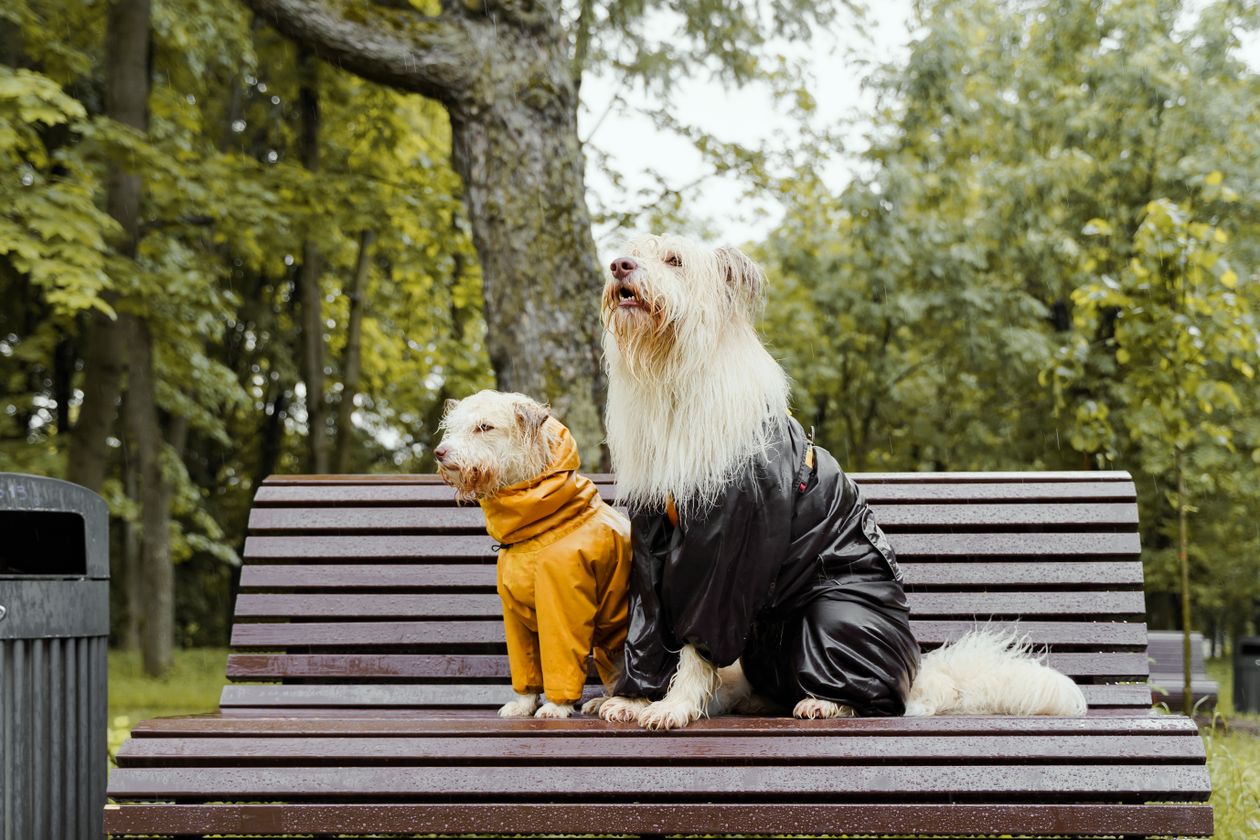
The Quick Answer by Dog Type
Use this table as a starting point when you ask yourself, do dogs need a raincoat in your particular situation.
| Dog Type | Raincoat Needed? | Why |
|---|---|---|
| Toy and small breeds (Chihuahua, Yorkie) | Usually yes | Lose body heat quickly, sit close to wet ground |
| Short, thin coats (Greyhound, Whippet, Boxer) | Usually yes | Little insulation and almost no undercoat |
| Puppies and senior dogs | Often yes | Less able to regulate body temperature |
| Dogs with arthritis or health issues | Often yes | Cold, damp conditions can increase stiffness |
| Medium dogs with average coats | Optional | Helpful in cold or long walks, not essential |
| Thick double coats (Husky, Lab, Newfoundland) | Rarely | Natural water resistance and insulation |
Why Rain Affects Some Dogs More Than Others
Wet fur loses much of its ability to trap warm air. For a dog with a dense double coat, the outer guard hairs shed water and the undercoat stays relatively dry. For a dog with a single, short coat, rain soaks straight through to the skin, and wind on wet skin pulls heat away quickly. Small dogs have the added problem of a large surface area compared with their body mass, so they cool down faster than big dogs in the same weather.
The American Veterinary Medical Association’s guidance on cold weather pet safety notes that short-haired, very young, very old, and sick pets are more vulnerable to cold and may benefit from a sweater or coat. Cold rain is one of the situations where that advice matters most. So when people ask do dogs need a raincoat, the real question is usually whether their particular dog struggles to stay warm and dry.
Signs Your Dog Would Benefit From a Raincoat
Your dog will often answer do dogs need a raincoat for you. Look for these clues on rainy walks:
- Shivering or hunching up during or after the walk
- Refusing to go outside or putting on the brakes at the door
- Trying to rush home or hide under cover
- Coming back soaked to the skin and taking a long time to warm up
- Stiffness or limping after cold, wet walks, especially in older dogs
If you notice two or more of these regularly, a raincoat is worth trying. Many dogs who hate rain become noticeably happier to go out once they stay drier.
What to Look for in a Good Dog Raincoat
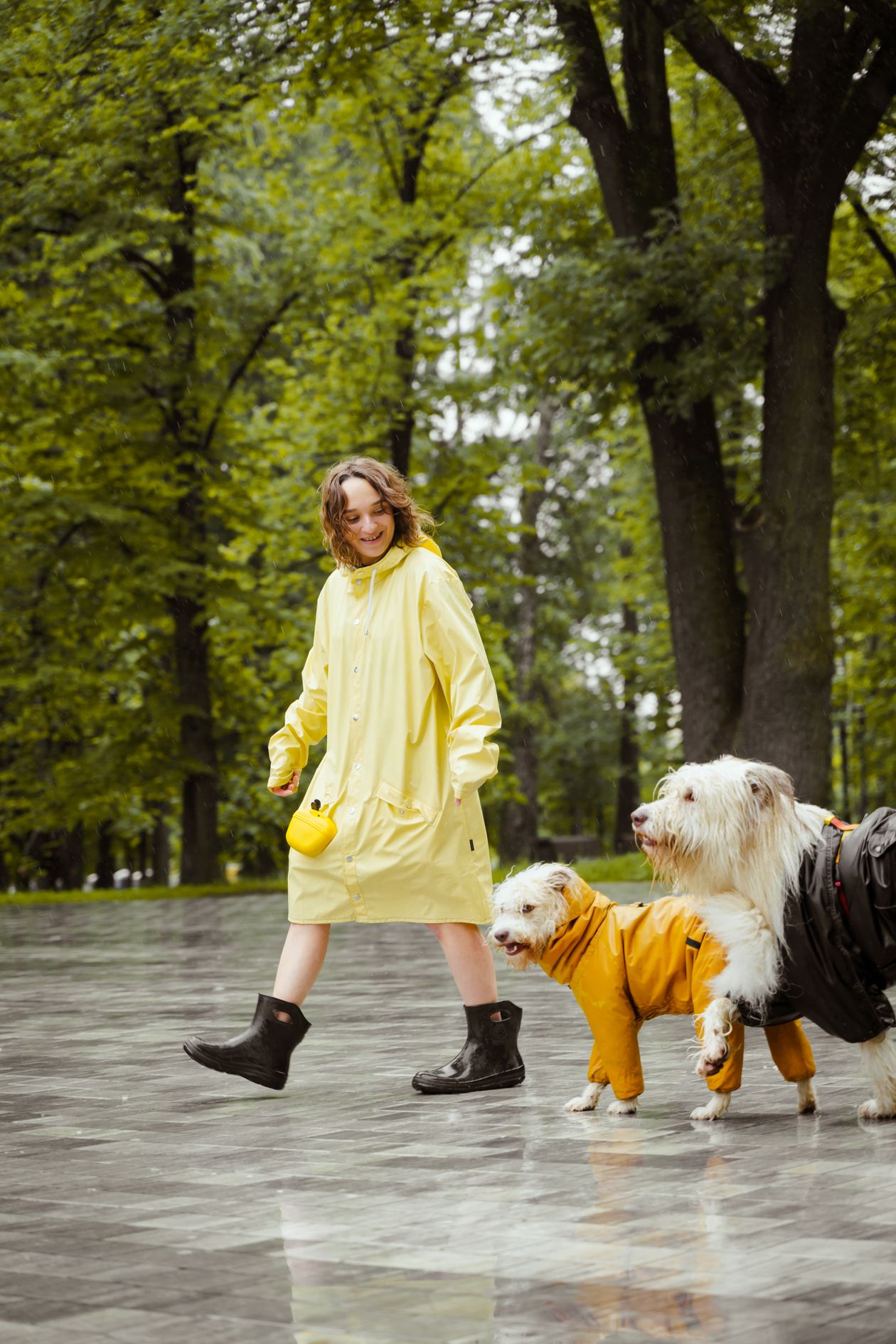
Once you have decided do dogs need a raincoat for your pup, choosing a good one comes down to a few features:
- Truly waterproof outer shell: look for coated or laminated fabric with taped seams, not just “water-resistant” material.
- Belly coverage: small and low-slung dogs get wettest underneath, so a coat with chest and belly coverage helps far more than a simple cape.
- Breathable lining: a mesh or fleece lining prevents the dog from overheating and sweating inside the coat.
- Easy fastening: wide hook-and-loop straps or buckles make it quick to put on a wriggling dog.
- Harness opening: a slit or zip port lets you clip the leash to a harness underneath rather than to the collar.
- Reflective trim: rainy days are dark days, and reflective strips make your dog visible to drivers.
- Machine washable: a coat you can toss in the washer after a muddy walk is one you will actually keep using.
How to Fit a Raincoat Properly
Measure your dog before buying. Most brands size by back length, from the base of the neck to the base of the tail, plus chest girth at the widest point. The coat should cover the back to just before the tail, sit snugly around the chest without pinching, and leave the legs free to move. You should be able to slide two fingers under the straps. A poor fit is the main reason owners conclude their pet does not need one, so fit matters as much as the question of do dogs need a raincoat at all.
Check the armpits and neck after the first few walks. Rubbing or red skin means the fit needs adjusting. A harness worn underneath should not twist or shift because of the coat. If you need a new harness to go with it, our guide on how long dog harnesses last explains when it is time to replace one.
Helping Your Dog Get Used to Wearing a Coat
Some dogs accept a coat immediately; others freeze or try to wriggle out. Introduce it slowly indoors. Let your dog sniff it, reward calmly, then drape it over their back for a few seconds before fastening it. Short indoor sessions with treats, followed by a short walk on a dry day, usually do the trick within a week. Never force a frightened dog into a coat, since that can create a lasting negative association.
When a Raincoat Is Not a Good Idea
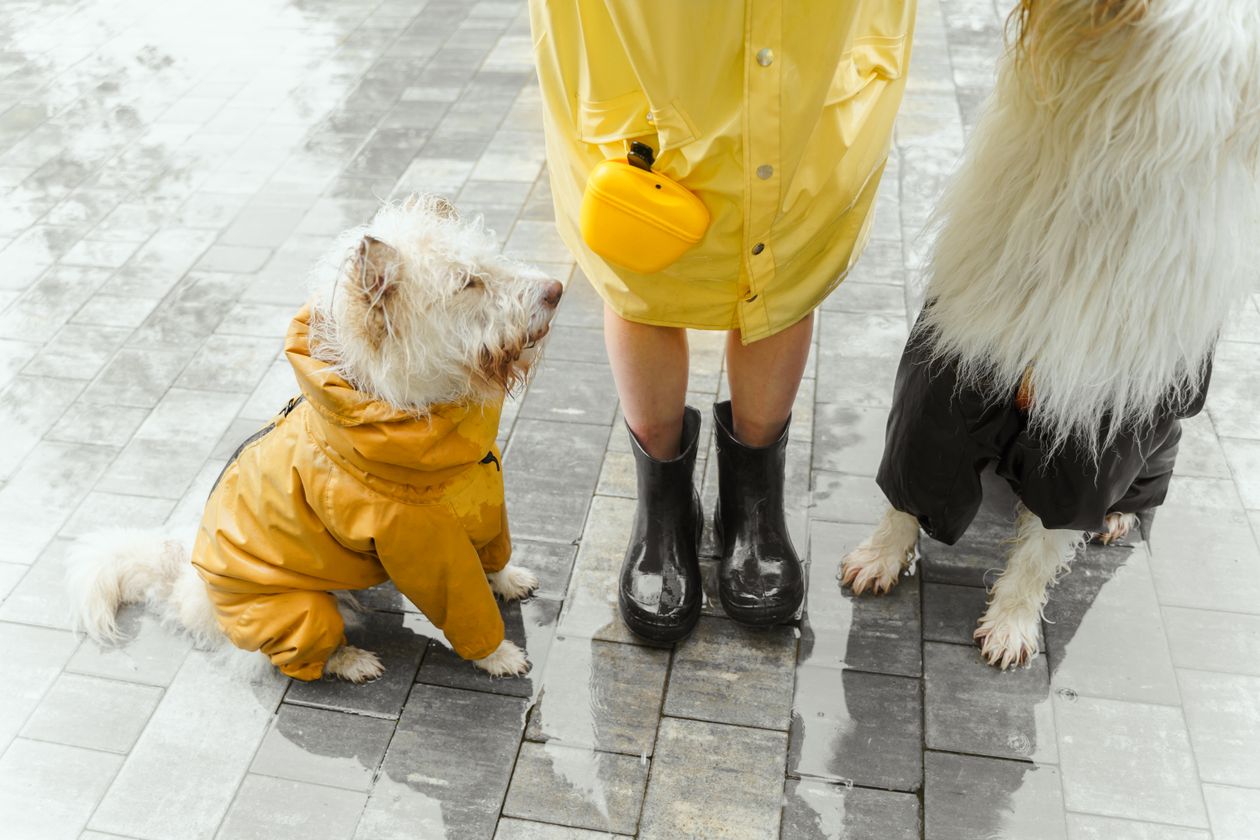
Coats are not always helpful, and sometimes the honest answer to do dogs need a raincoat is no. In warm summer rain, a coat can make a dog overheat, especially a thick-coated or flat-faced breed. Many double-coated dogs also find coats uncomfortable and are perfectly fine wet. Remove the coat as soon as you get home so trapped moisture does not irritate the skin, and dry your dog’s legs and belly with a towel. If your dog gets very muddy, a rinse may be needed; our guide on how often you should bathe your dog covers how to avoid over-bathing.
A Practical Scenario: Two Dogs, One Rainy Morning
Picture a household with a seven-year-old Italian Greyhound and a young Labrador. On a cold, rainy October morning, the Greyhound shivers at the door and tries to turn back after a few steps, while the Lab charges straight into the puddles. For the Greyhound, the answer to do dogs need a raincoat is a clear yes: a fleece-lined waterproof coat with belly coverage will keep the walk comfortable. For the Lab, a towel by the door is usually enough, although a light shell can help on very muddy days.
Shop This Guide
If this gear makes sense for your pet, these links show current options and prices. Check sizing, materials, and reviews before you buy, and ask your vet if your pet has special needs.
As an Amazon Associate, we earn from qualifying purchases at no extra cost to you.
Frequently Asked Questions
Do dogs need a raincoat if they have long hair?
Not always. Long-haired single-coated breeds can still get soaked to the skin, while double-coated breeds usually stay drier underneath. A coat can also keep long fur cleaner and less tangled.
Can a dog wear a raincoat all day?
It is best to use it only during walks. Wearing a coat for hours can trap heat and moisture against the skin.
Are raincoats bad for dogs?
No, as long as the coat fits well, is breathable, and is removed afterward. Problems usually come from poor fit or wearing it in warm weather.
What size raincoat does my dog need?
Measure back length and chest girth, then compare with the brand’s chart. Sizes vary a lot between brands, so never guess based on the label alone.
Do dogs need boots as well as a raincoat?
Usually not for rain alone, but boots can help in icy or salted conditions in winter.
Final Thoughts: Do Dogs Need a Raincoat?
Do dogs need a raincoat? Small dogs, short-coated breeds, puppies, seniors, and dogs with health issues usually benefit, especially in cold or windy rain. Thick double-coated breeds rarely need one, though a coat can still keep them cleaner. Watch your dog’s behavior on wet walks, choose a truly waterproof coat with belly coverage and a good fit, introduce it slowly, and take it off as soon as you get home. A well-chosen raincoat can turn a miserable rainy walk into a comfortable one.
Sources & Expert References

About the Author
Jordan Lee
Jordan Lee handles product testing for ThePetGearList. Jordan shares a house with two dogs (a 60-lb mixed breed and a small terrier) and one cat, so gear gets tested across very different size and behavior needs before anything gets recommended. Before starting this site, Jordan worked at a mid-size animal shelter for five years, fitting harnesses and crates on hundreds of dogs of every size and temperament and seeing firsthand which gear held up to daily shelter use and which fell apart in a month. Every guide on this site is built the same way: buy or borrow the leading options in a category, run them for at least two weeks with real pets, and note the specific failure points — a harness buckle that cracked, a crate latch that a strong dog worked open, a feeder that clogged. The cheapest option that survives that test gets recommended first.