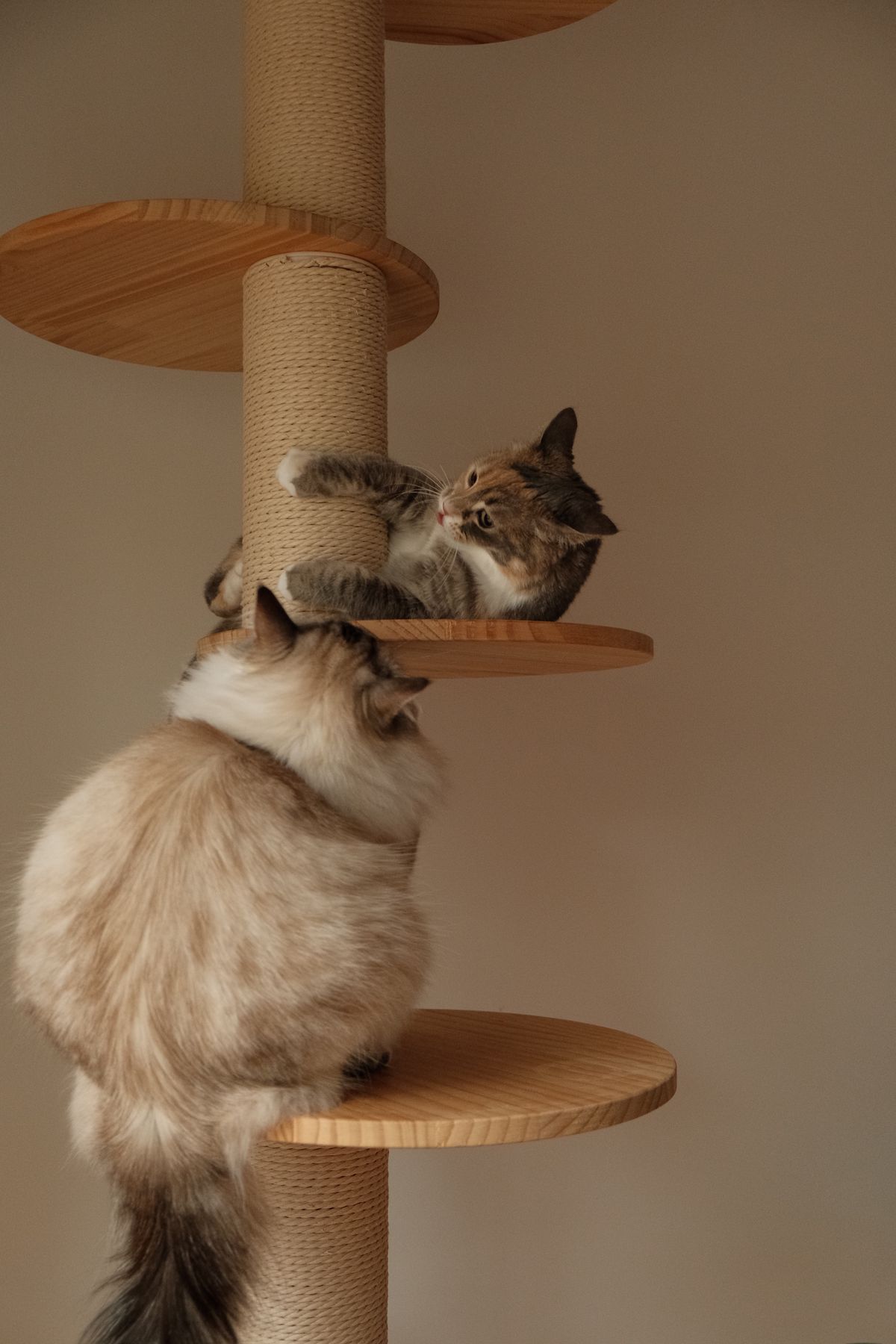
- Why More Than One Cat Needs More Than One Post
- Placement Beats Raw Count
- Material and Height Considerations
- Shop This Guide
- Frequently Asked Questions
- Bottom Line: How Many Scratching Posts Do You Need?
- Rotating and Refreshing Posts Over Time
- Matching Posts to Your Cat’s Habits
- Free New Pet Owner Checklist
- Everything you need for your dog or cat's first weeks home — get the free printable checklist.
As an Amazon Associate, we earn from qualifying purchases linked in this post.
How many scratching posts do you need? A common rule of thumb is one scratching post per cat, plus one extra for the household — so a two-cat home benefits from at least three posts placed in different rooms. This spreads out scratching opportunities and reduces competition over a single spot.
Location matters as much as quantity, since a post tucked in an unused corner often gets ignored no matter how many you own.
Why More Than One Cat Needs More Than One Post
Cats can be territorial about scratching spots, and a single shared post in a multi-cat home sometimes leads to guarding behavior or one cat avoiding it entirely. This is the main reason how many scratching posts do you need scales with cat count, not just square footage.
Placement Beats Raw Count
A post near a sleeping area, another near a main entryway, and one near furniture your cat has already scratched all tend to get more use than posts placed purely for tidiness. Vertical and horizontal scratchers together also cover more cats’ preferences.
Material and Height Considerations
Sisal rope or sisal fabric posts hold up best to repeated scratching, and posts should be tall enough for a full-body stretch. For general cat behavior guidance, see the ASPCA’s cat care resources.
Shop This Guide
If this gear makes sense for your pet, these links show current options and prices. Check sizing, materials, and reviews before you buy, and ask your vet if your pet has special needs.
Want our tested picks? Read our guide to the best cat scratching post.
As an Amazon Associate, we earn from qualifying purchases at no extra cost to you.
Frequently Asked Questions
Can too few scratching posts cause furniture damage?
Yes — if how many scratching posts do you need falls short of what your cats actually use, they’ll often redirect that instinct to couches or carpet edges instead.
Do kittens need their own scratching post?
A smaller, kitten-sized post introduced early helps establish good habits, and it counts toward the same one-per-cat-plus-one guideline as your cats grow.
Bottom Line: How Many Scratching Posts Do You Need?
To sum up how many scratching posts do you need: plan on one per cat plus one extra, spread across different rooms rather than clustered in one spot.
Rotating and Refreshing Posts Over Time
Even well-placed posts benefit from occasional repositioning, since cats can lose interest in a static setup after months in the same spot. Sprinkling a little catnip on a neglected post is a simple, effective way to renew interest without buying anything new.
As posts age, they’ll eventually need replacing or rewrapping — our cat tree lifespan guide covers what that timeline typically looks like.
Do cats prefer horizontal or vertical scratchers?
Individual cats have real preferences, and offering both styles across your posts is the most reliable way to cover whichever your specific cats favor.
Matching Posts to Your Cat’s Habits
Watching where your cat already scratches — furniture arms, doorframes, carpet edges — tells you exactly where a post is most likely to succeed. Placing a new post directly next to an existing trouble spot, then gradually moving it a few inches at a time toward a more convenient location, works better than placing it somewhere arbitrary from the start.
Sprinkling catnip or using a pheromone spray on a new post can also speed up adoption in cats slow to try something new.
One more practical note: trim your cat’s nails regularly alongside providing scratching posts, since sharp nails combined with an under-used post setup can still lead to noticeable furniture damage even in an otherwise well-equipped home.
Sources & Expert References

About the Author
Jordan Lee
Jordan Lee handles product testing for ThePetGearList. Jordan shares a house with two dogs (a 60-lb mixed breed and a small terrier) and one cat, so gear gets tested across very different size and behavior needs before anything gets recommended. Before starting this site, Jordan worked at a mid-size animal shelter for five years, fitting harnesses and crates on hundreds of dogs of every size and temperament and seeing firsthand which gear held up to daily shelter use and which fell apart in a month. Every guide on this site is built the same way: buy or borrow the leading options in a category, run them for at least two weeks with real pets, and note the specific failure points — a harness buckle that cracked, a crate latch that a strong dog worked open, a feeder that clogged. The cheapest option that survives that test gets recommended first.