- What to Check For Weekly
- Chew Toys vs. Plush Toys
- Rotating Toys Extends Their Life
- Shop This Guide
- Frequently Asked Questions
- Bottom Line: How Often Should You Replace Dog Toys?
- Storing and Cleaning Toys Between Uses
- Signs a Toy Doesn’t Match Your Dog’s Chew Style
- Free New Pet Owner Checklist
- Everything you need for your dog or cat's first weeks home — get the free printable checklist.
As an Amazon Associate, we earn from qualifying purchases linked in this post.
How often should you replace dog toys? There’s no fixed calendar interval — the real answer is based on wear, not time. Check toys weekly for cracks, exposed stuffing, loose parts, or squeakers coming loose, and replace immediately if you find any of these, regardless of how new the toy is.
A heavy chewer can destroy a toy in days, while a gentle player might keep the same rope toy intact for months, which is why frequency-based rules don’t really work here.
What to Check For Weekly
Small torn-off pieces, splintering rubber, and frayed rope fibers are the biggest choking and ingestion hazards. Any toy showing these signs should be tossed immediately rather than left in rotation.
Chew Toys vs. Plush Toys
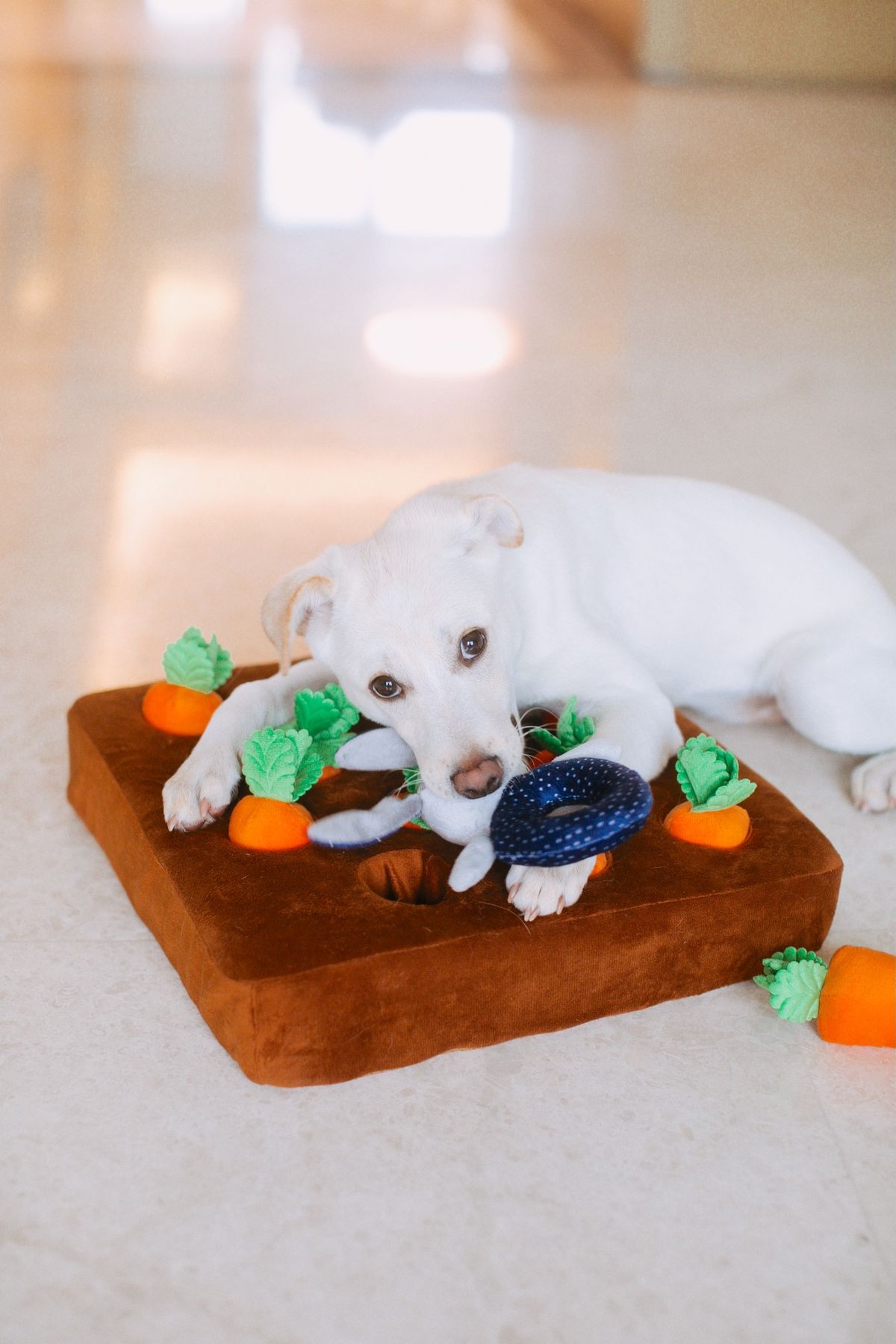
Hard rubber chew toys generally last much longer than plush toys, but should still be inspected for cracks that can trap bacteria or break off as sharp pieces. Plush toys with squeakers need more frequent checks since dogs often target the squeaker first.
Rotating Toys Extends Their Life
Keeping only 3-4 toys out at a time and rotating in fresh ones weekly reduces wear on any single toy and keeps your dog more engaged overall. Check the ASPCA’s dog care resources for more on toy safety.
Shop This Guide
If this gear makes sense for your pet, these links show current options and prices. Check sizing, materials, and reviews before you buy, and ask your vet if your pet has special needs.
Want our tested picks? Read our guide to the best dog chew toys.
As an Amazon Associate, we earn from qualifying purchases at no extra cost to you.
Frequently Asked Questions
Are more expensive dog toys more durable?
Generally yes for hard rubber and reinforced designs, but even durable toys need the same inspection routine, since how often should you replace dog toys depends on your specific dog’s chewing habits.
Should puppies have different toy replacement rules?
Puppies teethe aggressively and go through toys faster, so check theirs more frequently than an adult dog’s toys during that stage.
Bottom Line: How Often Should You Replace Dog Toys?
To sum up how often should you replace dog toys: inspect weekly and replace based on visible wear and damage, not on a fixed schedule.
Storing and Cleaning Toys Between Uses
Washing fabric toys periodically and wiping down rubber toys with mild soap and water reduces bacteria buildup, especially for toys that spend time outdoors or get chewed on heavily. Air-drying fully before returning a toy to rotation also helps it hold up longer.
Toy care is one part of a broader maintenance routine — our nail trimming guide covers another regular check that’s easy to overlook.
Should I throw away a toy at the first sign of wear?
Minor surface wear on a hard rubber toy usually isn’t urgent, but anything with a loose piece, exposed squeaker, or sharp edge should be removed right away regardless of overall condition.
Signs a Toy Doesn’t Match Your Dog’s Chew Style
A toy rated for light chewers that gets destroyed within minutes by a powerful chewer isn’t a failure of the toy so much as a mismatch — durability ratings from manufacturers are a useful starting filter before buying. Rubber toys rated for aggressive chewers, or reinforced stitching on plush designs, close this gap for stronger dogs.
Supervising a new toy type for the first few sessions helps you learn how your specific dog interacts with it before leaving them unsupervised with it regularly.
One more practical note: keep a small rotation log of which toys are currently out, since this makes it easier to notice a toy that’s overdue for inspection, especially in multi-dog households where wear can be harder to track.
Sources & Expert References

About the Author
Jordan Lee
Jordan Lee handles product testing for ThePetGearList. Jordan shares a house with two dogs (a 60-lb mixed breed and a small terrier) and one cat, so gear gets tested across very different size and behavior needs before anything gets recommended. Before starting this site, Jordan worked at a mid-size animal shelter for five years, fitting harnesses and crates on hundreds of dogs of every size and temperament and seeing firsthand which gear held up to daily shelter use and which fell apart in a month. Every guide on this site is built the same way: buy or borrow the leading options in a category, run them for at least two weeks with real pets, and note the specific failure points — a harness buckle that cracked, a crate latch that a strong dog worked open, a feeder that clogged. The cheapest option that survives that test gets recommended first.