- Quick Answer: Toy Numbers by Dog Type
- Why Toys Matter
- The Five Main Types of Dog Toys
- Why Toy Rotation Works
- Matching Toys to Your Dog
- Toy Safety Tips
- When to Replace and Clean Toys
- Interactive Play Beats a Big Toy Box
- Signs Your Dog Needs More or Different Toys
- Toys for Dogs Left Alone
- Common Mistakes to Avoid
- Shop This Guide
- A Practical Scenario: The Bored Labrador
- Frequently Asked Questions
- Final Thoughts: How Many Toys Does a Dog Need?
- Free New Pet Owner Checklist
- Everything you need for your dog or cat's first weeks home — get the free printable checklist.
As an Amazon Associate, we earn from qualifying purchases linked in this post.
How many toys does a dog need? Most dogs do well with about 5 to 10 toys in total, with only 3 to 5 available at any one time and the rest rotated in every week or so. A good mix covers chewing, fetching, tugging, comfort, and mental challenge. The exact number matters less than variety, safety, and how you use the toys to keep your dog engaged.
Some dogs are happy with a single beloved ball, while energetic puppies and power chewers seem to need a new toy every week. Below we explain how many toys different dogs need, the main toy types, how to rotate toys, safety tips, and when to replace them, so you can build a toy collection that keeps your dog busy without cluttering your home.
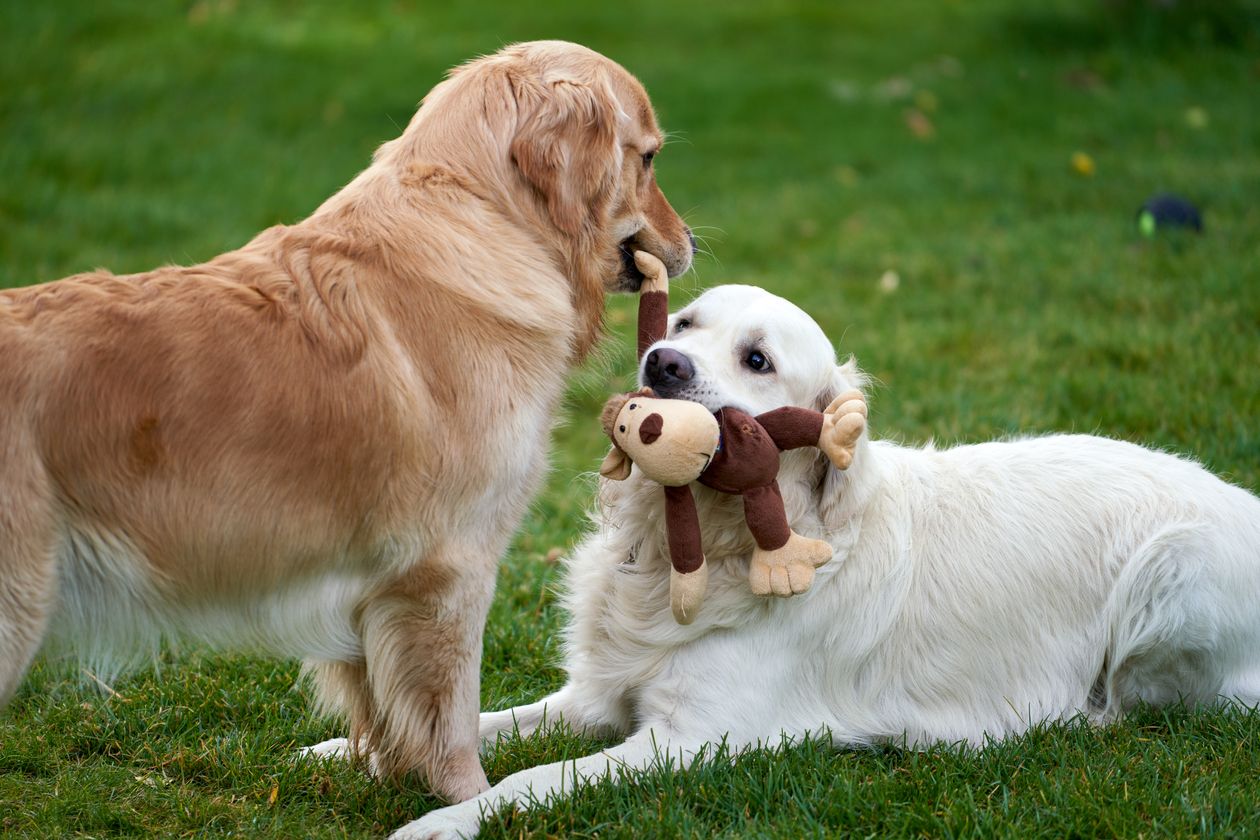
Quick Answer: Toy Numbers by Dog Type
This table gives a quick answer to how many toys does a dog need for different dogs.
| Dog Type | Total Toys | Out at Once | Focus |
|---|---|---|---|
| Puppy (teething) | 8–12 | 4–5 | Chew toys, soft toys, teething toys |
| Adult, moderate energy | 5–10 | 3–4 | Mix of chew, fetch, puzzle |
| High-energy or working breed | 8–12 | 4–5 | Puzzles, tug, fetch |
| Power chewer | 5–8 durable | 2–3 | Tough chew toys |
| Senior dog | 4–6 | 2–3 | Soft toys, gentle puzzles |
Why Toys Matter
Toys are not just a treat; they meet real needs. Chewing relieves stress, cleans teeth, and soothes teething puppies. Fetch and tug provide physical exercise and a chance to bond with you. Puzzle toys and treat dispensers give mental stimulation, which can tire a dog as much as a long walk. Dogs without enough outlets often invent their own, which is how shoes, furniture, and cushions get destroyed. Thinking about these needs is the best way to answer how many toys does a dog need in your home.
The Five Main Types of Dog Toys
- Chew toys: durable rubber or nylon toys and safe chews for gnawing.
- Fetch toys: balls, flying discs, and floating toys for running.
- Tug toys: rope and rubber tug toys for interactive play.
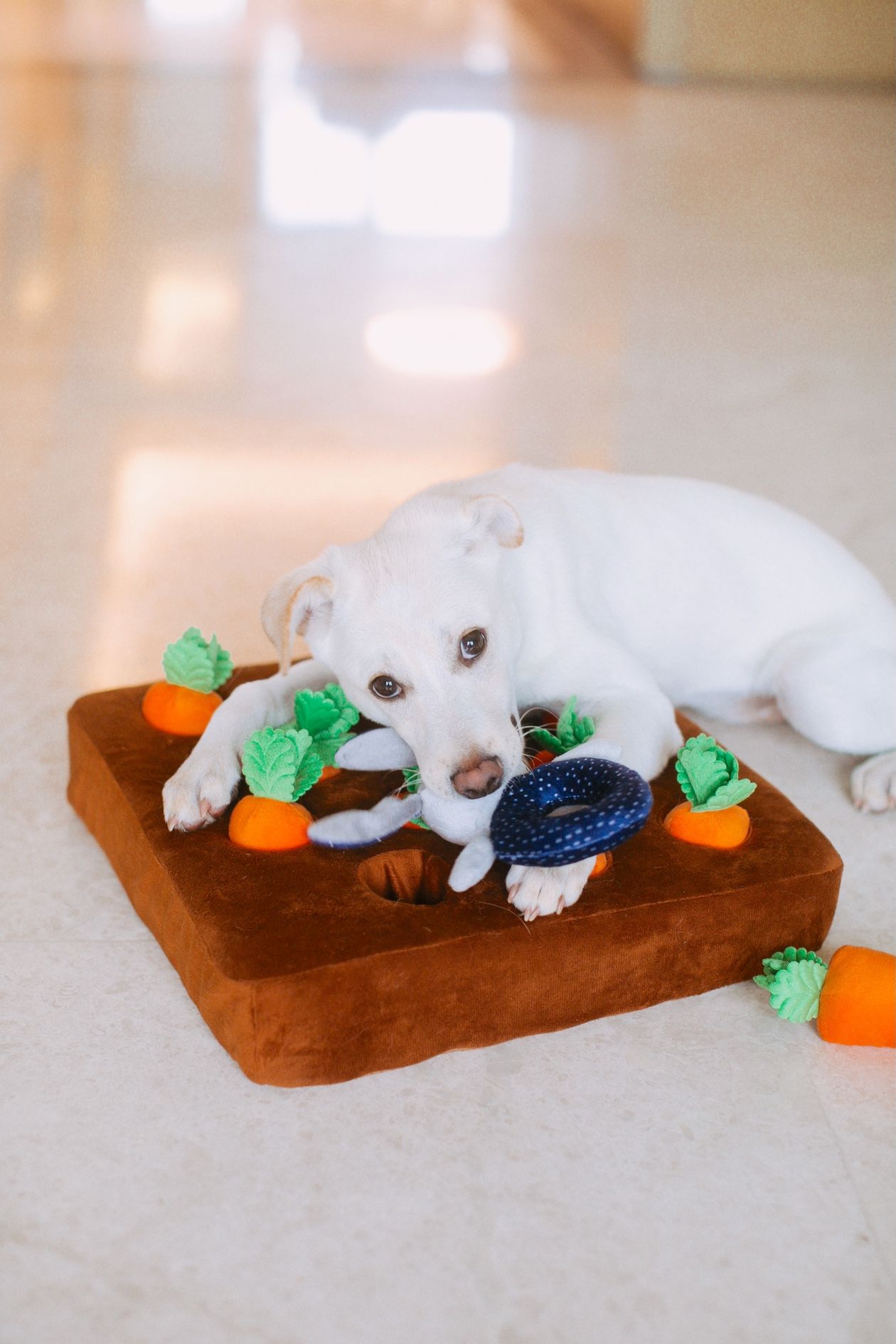
- Puzzle and treat toys: food-dispensing balls, snuffle mats, and puzzles.
- Comfort toys: soft plush toys for carrying and cuddling.
A balanced toy box has at least one or two from each category. Our guides to the best dog chew toys and the best dog puzzle toys highlight durable options in the two categories most dogs use every day.
Why Toy Rotation Works
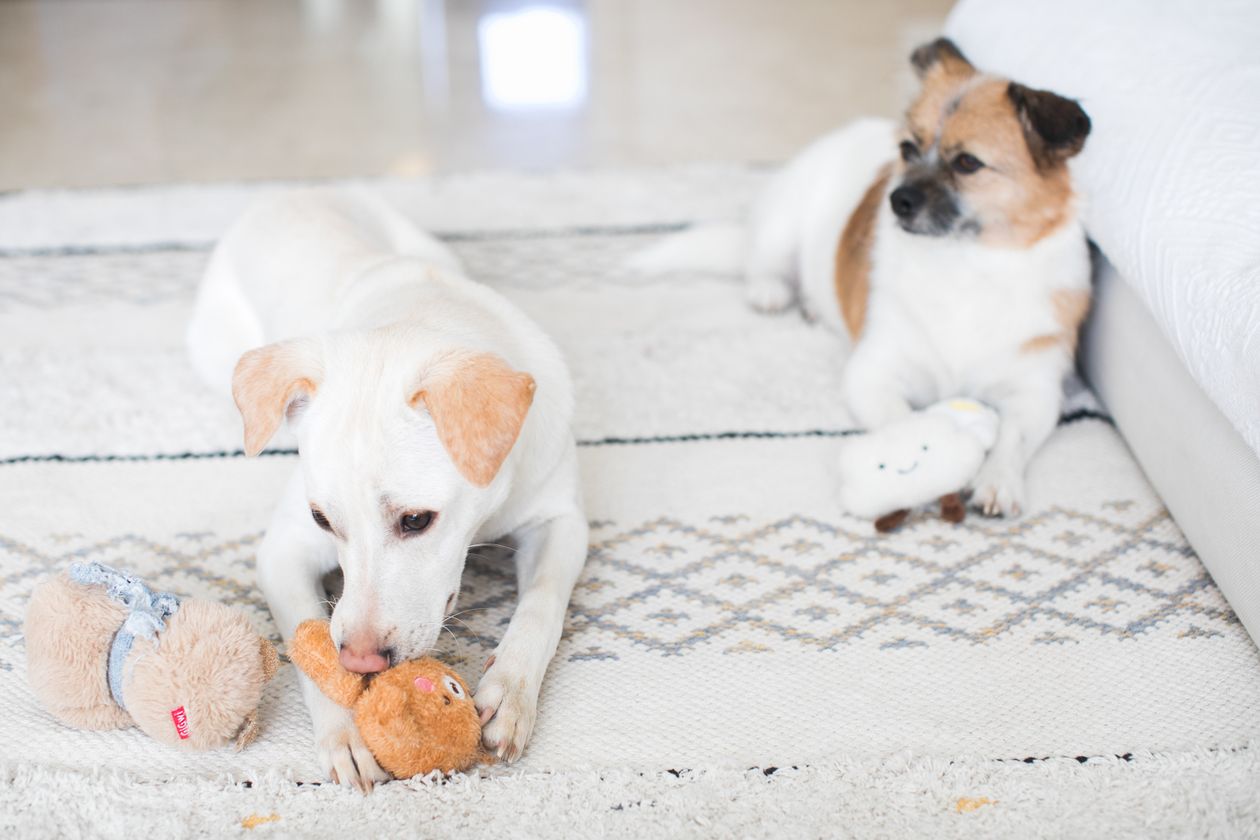
Dogs get bored with toys that are always available. Rotating toys keeps them interesting: put out three to five toys, store the rest out of sight, and swap a few every week. When an old toy reappears, many dogs treat it as new. Rotation also lets you inspect toys for damage, clean them, and notice which ones your dog genuinely loves. Most owners find that rotation means they need fewer toys overall, which is a practical answer to how many toys does a dog need without overspending.
Matching Toys to Your Dog
Every dog has a play style. Retrievers often love fetch toys and soft toys to carry. Terriers may prefer squeaky toys they can “hunt.” Herding breeds and working dogs thrive with puzzles and interactive games. Power chewers need tough rubber toys rather than plush. Watch how your dog plays and buy more of what they enjoy instead of guessing. Size matters too: a toy should be large enough that it cannot be swallowed or lodged in the throat, but small enough for your dog to carry comfortably.
Toy Safety Tips
- Choose the right size to prevent choking.
- Supervise plush and squeaky toys, especially with destructive dogs.
- Remove damaged toys with loose pieces, exposed stuffing, or cracks.
- Avoid very hard items like antlers or bones that can fracture teeth.
- Keep strings and ribbons away, as they can cause intestinal blockages.
- Wash toys regularly to reduce bacteria.
The ASPCA’s guidance on dog toys offers more advice on choosing safe toys and supervising play.
When to Replace and Clean Toys
Toys wear out at different rates. Plush toys may last days with an enthusiastic chewer, while a tough rubber toy can last a year or more. Replace toys when they crack, tear, become small enough to swallow, or have pieces coming off. Wash soft toys in the washing machine and scrub rubber toys with warm, soapy water regularly. See our guides on how often to replace dog toys and how often to clean dog toys for detailed schedules.
Interactive Play Beats a Big Toy Box
A huge pile of toys is no substitute for playing with your dog. Ten minutes of tug, fetch, or a hide-and-seek game with treats builds your bond and burns more energy than a dozen toys lying on the floor. Many behavior problems ease when dogs get daily interactive play plus a couple of good chew toys for alone time. So when you ask how many toys does a dog need, remember that your involvement counts as much as the toys themselves.
Signs Your Dog Needs More or Different Toys
If your dog chews furniture, shoes, or cables, they may need more appropriate chew options. If they ignore their toys, the toys may be the wrong type, too easy, or simply boring from always being out. Restlessness, attention-seeking barking, and digging can signal a need for more mental stimulation, such as puzzles or snuffle mats. On the other hand, if toys are scattered everywhere and your dog plays with only one, you probably have more than you need. These clues help you fine-tune how many toys does a dog need for your specific dog.
Toys for Dogs Left Alone
When your dog spends time alone, choose only safe, durable toys that can be used unsupervised, such as sturdy rubber chew toys or a stuffed food-dispensing toy. Remove plush and squeaky toys that could be torn apart and swallowed. A frozen food-dispensing toy can keep many dogs busy for 20 to 30 minutes and helps them settle after you leave. Having two or three alone-time toys in rotation is plenty for most dogs.
Common Mistakes to Avoid
- Leaving every toy out all the time.
- Buying the wrong size for your dog.
- Keeping damaged toys around.
- Relying on toys instead of daily walks and play.
- Giving plush toys to power chewers unsupervised.
Shop This Guide
If you decide this gear is right for your pet, these links show current options and prices. Check reviews, sizing, and materials before you buy.
Want our top picks? Read our guide to the best dog chew toys.
As an Amazon Associate, we earn from qualifying purchases at no extra cost to you.
A Practical Scenario: The Bored Labrador
Imagine a two-year-old Labrador with a basket of twenty toys who still chews the couch cushions. His owners keep only four toys out, store the rest, and swap them every Sunday. They add a food puzzle for breakfast and a daily ten-minute game of tug. Within a couple of weeks the couch is safe, and he greets each “new” toy with excitement. For them, the answer to how many toys does a dog need turned out to be fewer toys, used better.
Frequently Asked Questions
How many toys does a dog need?
Most dogs do well with 5 to 10 toys, with 3 to 5 out at a time and the rest rotated.
Can a dog have too many toys?
Yes, too many toys out at once can make dogs bored and less interested. Rotation helps.
How often should I rotate my dog’s toys?
About once a week works well for most dogs.
Which toys can a dog have alone?
Only durable chew toys or food-dispensing toys that cannot easily be torn apart.
Final Thoughts: How Many Toys Does a Dog Need?
How many toys does a dog need? Around 5 to 10 total, with a few out at a time and a mix of chew, fetch, tug, puzzle, and comfort toys. Rotate weekly, choose the right size and durability, replace damaged toys, and pair toys with daily interactive play. A small, well-chosen collection keeps your dog happier than a huge pile ever could.
Sources & Expert References

About the Author
ThePetGearList Team
ThePetGearList is an independent pet-gear site for dog and cat owners. We put each guide together from manufacturer specifications, veterinary and animal-welfare guidance (such as the AVMA and ASPCA), and patterns in verified owner reviews. We use AI writing tools to help draft guides and review every guide before it goes live. We have not hands-on tested every product we mention, so please check the manufacturer's current sizing and safety instructions before you buy, and ask your vet about health questions. Spotted something out of date? Tell us through the Contact page.